
In Shakespeare’s works, the word schedule refers to a document, a written list, or formal inventory. For instance, in A Midsummer Night’s Dream, the word denotes a specific written document containing a list. “I will deliver it [the schedule] to you in the letter.” (Act 3, Scene 2, when Puck tells Oberon he will deliver a document—the schedule—to him.) I am a lifetime list-maker. Every day, I list what I plan to do—network, chores, dog walks, meals, time for devotion, writing, reading, practicing—because I love having a schedule and hate wasting time.
In modern English, schedule can also mean a legal document, such as a tax schedule. But everyday usage usually involves a timeline of events or a timetable, or the arranging of plans. While translations of the Bible rarely use the word “schedule,” scripture does emphasize timing, seasons, and planning.
Schedule and timing
For the revelation awaits an appointed time; it speaks of the end and will not prove false. Though it linger, wait for it; itwill certainly come and will not delay. Habakkuk 2:3 NIV
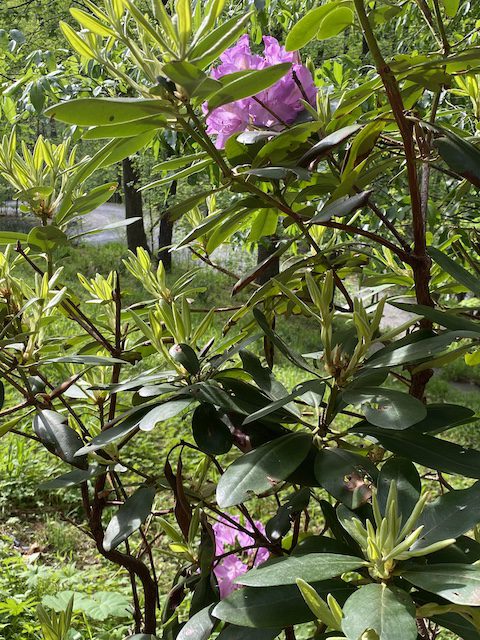
Fourteen years ago, I planted five rhododendron bushes in the meadow just outside the northside basement door. Rhododendrons are in the same family as mountain laurel, so I figured since the deer don’t eat wild mountain laurel, they’d avoid cultivated rhododendrons, too. Wrong. Only two bushes have survived the deer, and they have never blossomed. Until this year.
In Habakkuk 2:3, God says that His promises and plans have a specific, ordained time for fulfillment, even if that fulfillment seems to take too long—fourteen, four hundred or four thousand years. Believers are told to wait and trust that God’s vision will come without fail. According to His appointed time, His timeline, His perfect schedule, not our imperfect schedules.
I’m not big on waiting. But I assure you that when I saw the rhododendron’s pink blossoms, my heart sang His praises. Waiting on God is not a waste of time, for waiting grows our faith and hope for His eternal glory to come.
Schedule and seasons
There is a time for everything, and a season for every activity under the heavens: Ecclesiastes 3:1 NIV
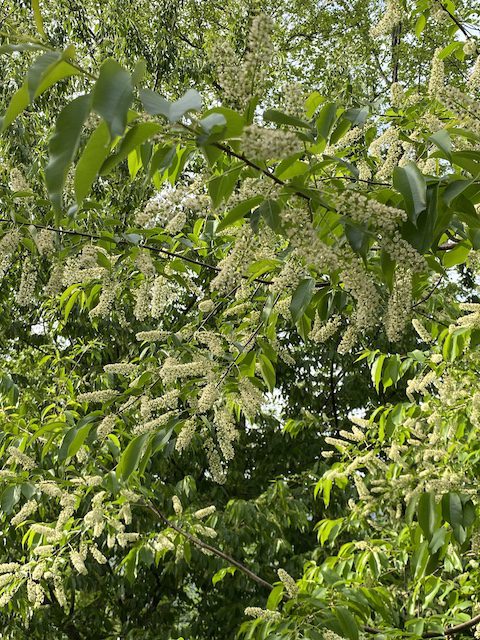
Before we moved to Vanaprastha permanently, Keith and I planted six small cherry trees that had seeded, likely from birds, in planters we kept on our deck in Alexandria. Why not see if they’d like to grow at our new home? Of the six, three survived, one at the top of the driveway and two in the meadow near the rhododendrons. Now large trees, they send out a profusion of white, dangling, lace-like blossoms in spring followed by small red and black cherries, attracting butterflies and birds.
Most of us are familiar with Ecclesiastes 3:1 if not from scripture then from Pete Seeger’s Turn, Turn, Turn, popularized by Bob Dylan and The Bryds in the 60s. Both words and song teach that life’s events are ordained cycles with specific seasons for particular experiences. This is the essence of why Keith and I named our mountain home Vanaprastha, the third season of life, the fall and harvest time. Like the black cherries, we experienced spring in our early years, summer during our careers and while raising children, and now autumn. Human lives are purposeful but linear. And yet, every year, we get to re-envision our pasts, presents, and futures with the cyclical change of seasons.
God is sovereign. Trusting His timing, during times of certainty and uncertainty, brings peace and meaning to life. Wisdom.
Schedule and planning
Be very careful, then, how you live—not as unwise but as wise, making the most of every opportunity, because the days are evil. Therefore do not be foolish, but understand what the Lord’s will is. Ephesians 5:15-17 NIV
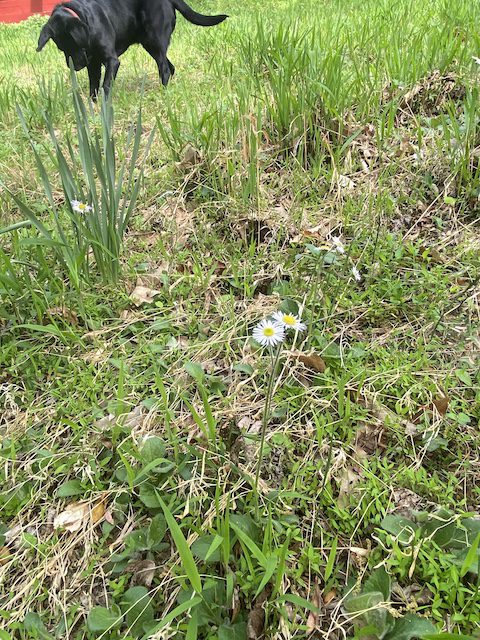
Unless the weather prohibits, I walk with dogs every day. I often linger in the meadow on the way home and visit with whatever is growing, now fleabane in bloom. George Washington Carver wrote in The Man Who Talks with the Flowers, “I love to think of nature as unlimited broadcasting stations, through which God speaks to us every day, every hour…. How do I talk to a little flower? Through it I talk to the Infinite. And what is the Infinite? It is that silent, small voice … that still, small voice.”
In Ephesians 5:15-17, Paul encourages us to live with intention and wisdom, making the most of every opportunity for good in a wicked world. By replacing foolishness with understanding of God’s will, we think of time as a precious resource. Like Paul, Annie Dillard, in The Writing Life, emphasized intention: “How we spend our days is, of course, how we spend our lives. What we do with this hour, and that one, is what we are doing… A schedule defends from chaos and whim. It is a net for catching days.”
So, I make daily schedules and lists to defend against chaos and whim, to make sure the day doesn’t get away from me. Yet, amid my intentional purposefulness, with hours of reading and writing, I remember George Washington Carver’s words: “…if a person walks in the woods and listens carefully, he can learn more than what is in books, for they speak with the voice of God.”
The voice of God in the rhododendrons, black cherries, and fleabane.
Linkup with Five Minute Friday.
Subscribe to Notes from Vanaprastha Podcasts on my YouTube Channel: https://www.youtube.com/@CaroleDuff
Subscribe to Notes from Vanaprastha: https://caroleduff.com
Follow me on Instagram: https://www.instagram.com/carole.duff2010/
Subscribe to my Friday Happy Hours Substack: https://substack.com/@caroleduff305076


0 Comments