
As a child, I knew a remnant meant a small remaining part, such as fabric or leftovers, remnants of a meal. A remnant could also be a natural habitat that hadn’t been significantly disturbed. As a believing adult, I learned that, Biblically, a remnant often refers to the faithful minority, people preserved by God after apostasy or destruction.
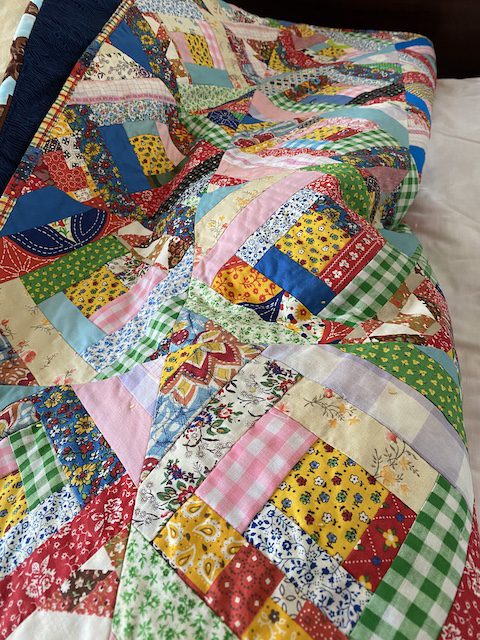
Remnant leftovers
When they had all had enough to eat, he said to his disciples, “Gather the pieces that are left over. Let nothing be wasted.” John 6:12 NIV
My parents grew up on farms in far northern Maine during the Depression. Nothing was wasted, not food or fabric, as in the picture of a pieced quilt sewn by my paternal grandmother. Ten years ago, before I started playing flute with the worship team, I worked with the quilters at church, pinning quilt tops, batting, and bottoms together and tying knots, the finished quilts all donated to Lutheran World Relief. Non-skilled work on my part, thank goodness, since I have no artistic ability in that regard. But I do, abundantly, in music.
In John 6:12, Jesus teaches that abundance provided by God should not be wasted. This is stewardship, about managing and not wasting our gifts. Nothing in God’s kingdom is wasted; all “leftovers,” including mistakes, tests, and trials, can be used to serve His greater purpose. And most importantly, trust that Jesus provides not only sufficiently but also more than enough.
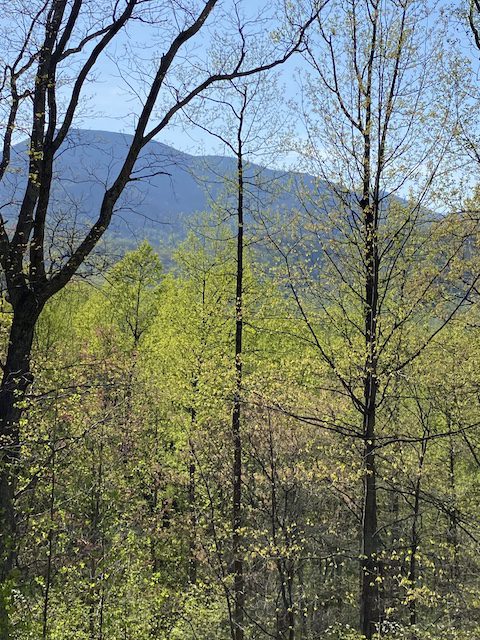
Remnant habitat
But in the seventh year the land is to have a year of sabbath rest, a sabbath to the Lord. Do not sow your fields or prune your vineyards. Do not reap what grows of itself or harvest the grapes of your untended vines. The land is to have a year of rest. Leviticus 25:4-5 NIV
We also use the term remnant in natural contexts, such as the remnant of a hurricane, wind and/or rain. Scripture passages about nature refer to leaving a remnant habitat undisturbed, as with the forest and Three Ridges Wilderness Area, our western view here at Vanaprastha. Letting the land rest is another form of stewardship of God’s creation.
A natural sabbatical year, dictated in Leviticus 25:4-5, is designated time for the soil to re-nourish. In a forest habitat, this ecological rest provides for God’s vulnerable creatures. But for people, sabbath—that remnant time leftover at the end of a work week— is designed for spiritual rejuvenation.
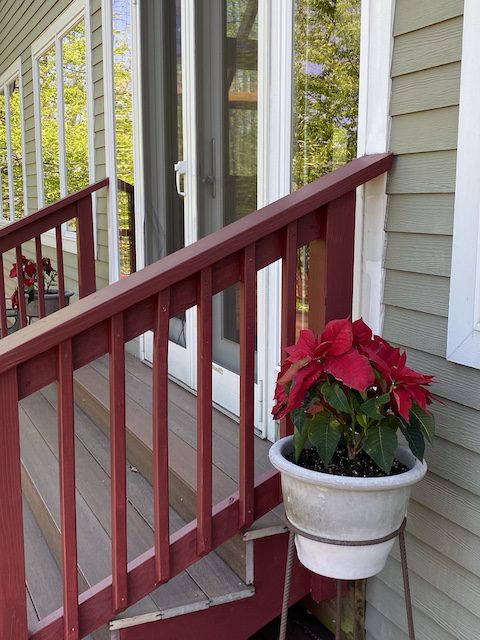
Remnant people
So too, at the present time there is a remnant chosen by grace. Romans 11:5 NIV
Now to the Biblical meaning of the word remnant, symbolized by this red poinsettia, a remnant of Christmas. In Romans 11:5, Paul writes about God’s faithfulness to Israel despite their rejection of Jesus as the Messiah. Paul refers to the story of Elijah, who thought he was the only worshipper who didn’t bow his knee to the pagan god Baal. But God assured Elijah that He’d kept a remnant of seven thousand faithful Israelites, as Paul similarly assures the small minority of Jewish Jesus believers, including Paul himself.
The Greek word for remnant, leimma, refers to a small portion of people, a remainder or survivors, leftovers from a larger group. Chosen by gracetells us that faithfulness is not based on merit or works or righteousness but on God’s unmerited favor. GRACE, or as our Pastor says, God’s, Riches, At, Christ’s, Expense. His promise. His undeserved kindness. His remnant people called in every generation.
Linkup with Five Minute Friday.
Subscribe to Notes from Vanaprastha Podcasts on my YouTube Channel: https://www.youtube.com/@CaroleDuff
Subscribe to Notes from Vanaprastha: https://caroleduff.com
Follow me on Instagram: https://www.instagram.com/carole.duff2010/
Subscribe to my Friday Happy Hours Substack: https://substack.com/@caroleduff305076


0 Comments